

Bringing Power to the People of the Valley
A new power frontier in North India
Bringing Power to the People of the Valley
A new power frontier in North India
Bringing Power to the People of the Valley
A new power frontier in North India
Project snapshot
Project Name
Northern Region Strengthening Scheme (NRSS)
Project Location
Jammu & Kashmir
Commissioned Date
Feb 2019
Total Power Evacuated
1000+ MW
Transmission length
854 cKm
Substation Capacity
735 MVA
Project snapshot
Project Name
Northern Region Strengthening Scheme (NRSS)
Project Location
Jammu & Kashmir
Commissioned Date
Feb 2019
Total Power Evacuated
1000+ MW
Transmission length
854 cKm
Substation Capacity
735 MVA
Project snapshot
Project Name
Northern Region Strengthening Scheme (NRSS)
Project Location
Jammu & Kashmir
Commissioned Date
Feb 2019
Total Power Evacuated
1000+ MW
Transmission length
854 cKm
Substation Capacity
735 MVA
winters are white, valleys are dark
winters are white, valleys are dark
winters are white, valleys are dark
Snow on the deodar branches outside a houseboat window. A shikara cutting a slow line across the Dal. Gulmarg's gondola lifting tourists above a pine forest dusted overnight.
For most of the country, and the world, winter in the Valley is a postcard.

Snow on the deodar branches outside a houseboat window. A shikara cutting a slow line across the Dal.
Gulmarg's gondola lifting tourists above a pine forest dusted overnight.
Gulmarg’s gondola lifting tourists above a pine forest dusted overnight.
For most of the country, and the world, winter in the Valley is a postcard.
When the temperature falls, something else falls. The Grid.
For the people who live there, the winter is different.

It is a hospital corridor on diesel backup.

A kerosene heater because the electric one will not run.

A child doing homework by a lantern because the line is down again, or never came up.
The Central Electricity Authority's own projections said demand would cross 4,200 megawatts by 2021-22. The arithmetic was not subtle.
The Central Electricity Authority’s own projections said demand would cross 4,200 megawatts by 2021-22. The arithmetic was not subtle.
The Central Electricity Authority’s own projections said demand would cross 4,200 megawatts by 2021-22. The arithmetic was not subtle.
By 2014, the state's peak power demand had reached around 2,400 megawatts.
2400 MW
2400 MW
2400 MW
Local generation produced 800 megawatts, mostly driven by rivers that slow down in winter.
800 MW
800 MW
800 MW
By 2021-22, The Central Electricity Authority's own projections said demand would cross 4,200 megawatts by 2021-22.
4200 MW
4200 MW
4200 MW
one corridor for the entire state
one corridor for the entire state
one corridor for the entire state
Everything beyond what J&K generated locally came in through one corridor. A single 400 kV line ran from Moga in Punjab to Kishenpur in Jammu, climbing the Pir Panjal range.
What that meant in practice was already on record.

A region famous for landslides, avalanche zones and the kind of weather that doesn't take instruction.
On 30 July 2012, the Northern Grid collapsed.
Half the country lost power. Recovery in the plains took hours. In J&K it exposed something more uncomfortable: a state with no fallback. If the line through Pir Panjal failed — for an hour, a day, a week — there was no second line waiting behind it.


the project
nobody wanted
the project
nobody wanted
the project
nobody wanted
NRSS-29 went out to tender in 2014. Indian transmission tenders typically draw five to ten serious bids. This one drew two.
That number is the first thing worth pausing on. Everyone else read the same project document and walked away.
The document asked for 415 kilometres of 400 kV double-circuit transmission line and a GIS substation at Amargarh, in Baramulla — built, owned and operated by a private developer for 35 years.
Then it described the route.
NRSS-29 went out to tender in 2014. Indian transmission tenders typically draw five to ten serious bids. This one drew two.
That number is the first thing worth pausing on. Everyone else read the same project document and walked away.
The document asked for 415 kilometres of 400 kV double-circuit transmission line and a GIS substation at Amargarh, in Baramulla — built, owned and operated by a private developer for 35 years.
Then it described the route.

shorter working windows
The only road into much of the corridor was open just five to six months annually.
shorter working windows
The only road into much of the corridor was open just five to six months annually.

wildlife habitats
Twenty-seven kilometres ran through the Hirpora Wildlife Sanctuary.
wildlife habitats
Twenty-seven kilometres ran through the Hirpora Wildlife Sanctuary.

FOREST CLEARANCES
A further 127 kilometres required forest clearances.
FOREST CLEARANCES
A further 127 kilometres required forest clearances.

MILITAnt INSURGENCY
Seventy kilometres ran within 500 metres of the Line of Control.
MILITAnt INSURGENCY
Seventy kilometres ran within 500 metres of the Line of Control.

right of way access
Apple /walnut orchards that have been farmed for four generations
right of way access
Apple /walnut orchards that have been farmed for four generations

extreme temperatures
The line would climb to over 3,600 metres at its highest tower with temperatures upto -5C
extreme temperatures
The line would climb to over 3,600 metres at its highest tower with temperatures upto -5C
Geography was only half of it.
The other half was that nobody had done this before.
Jammu & Kashmir is a Special Category State. Land cannot be acquired the way it is elsewhere in India — under the Land Acquisition Act, by the government, by notification.
In J&K, the developer had to purchase it. Plot by plot. From owners who, in much of the corridor, had no formal title documents — only generations of cultivation.
Geography was only half of it.
The other half was that nobody had done this before.
Jammu & Kashmir is a Special Category State. Land cannot be acquired the way it is elsewhere in India — under the Land Acquisition Act, by the government, by notification.
In J&K, the developer had to purchase it. Plot by plot. From owners who, in much of the corridor, had no formal title documents — only generations of cultivation.

No private developer had ever built a transmission line in the state on a Build-Own-Operate-Maintain basis. There was no template for how the Power Development Department would interact with a private SPV.
No nodal agency for forest clearances under this kind of contract. No precedent for executing sale deeds at this scale through state revenue officials. Every regulatory step would have to be invented as the project moved.
Resonia won the bid in 2014. The company committed to delivering the project 12 months ahead of the scheduled commercial operation date.
No private developer had ever built a transmission line in the state on a Build-Own-Operate-Maintain basis. There was no template for how the Power Development Department would interact with a private SPV.
No nodal agency for forest clearances under this kind of contract. No precedent for executing sale deeds at this scale through state revenue officials. Every regulatory step would have to be invented as the project moved.
Resonia won the bid in 2014. The company committed to delivering the project 12 months ahead of the scheduled commercial operation date.
In an industry where transmission lines routinely overrun by years, this was an unusual promise. It was also, on the evidence of the project document, an unreasonable one.
In an industry where transmission lines routinely overrun by years, this was an unusual promise. It was also, on the evidence of the project document, an unreasonable one.
In an industry where transmission lines routinely overrun by years, this was an unusual promise. It was also, on the evidence of the project document, an unreasonable one.
building where the roads end
building where the roads end
building where the roads end
Tower components weighing up to forty tonnes had to reach locations up to six kilometres from the nearest motorable road.
Tower components weighing up to forty tonnes had to reach locations up to six kilometres from the nearest motorable road.
The team did the arithmetic. At the head-load rate a mule train can sustain on a 3,000-metre slope — forty kilos per animal per day, weather permitting, working seasons of seven to nine months — the project's deadline would slip by years. Not months. Years.
The team did the arithmetic. At the head-load rate a mule train can sustain on a 3,000-metre slope — forty kilos per animal per day, weather permitting, working seasons of seven to nine months — the project’s deadline would slip by years. Not months. Years.
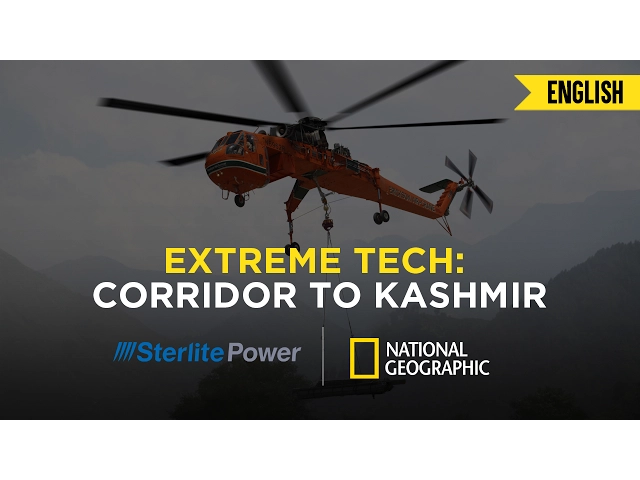
Sterlite Power leased an Ericsson S-64 Aircrane from the United States, for projects that had no other way to move what they needed to move.
Sterlite Power leased an Ericsson S-64 Aircrane from the United States, for projects that had no other way to move what they needed to move.
Sterlite Power leased an Ericsson S-64 Aircrane from the United States, for projects that had no other way to move what they needed to move.

The S-64 is a heavy-lift helicopter — a six-bladed, twin-engine machine designed for logging and firefighting, capable of lifting around 9,000 kilograms in a single sortie. Its earlier military version flew in Vietnam.
The helicopter — called Olga by her crew — arrived at Mundra port in Gujarat by ship, was assembled, and flew north to a base camp at Bafliaz, in Poonch district, near the Line of Control.
Bafliaz was chosen because it had road access wide enough for the staging yard and because the army's presence in the area made the operation safer.
The helicopter — called Olga by her crew — arrived at Mundra port in Gujarat by ship, was assembled, and flew north to a base camp at Bafliaz, in Poonch district, near the Line of Control.
Bafliaz was chosen because it had road access wide enough for the staging yard and because the army’s presence in the area made the operation safer.
The helicopter — called Olga by her crew — arrived at Mundra port in Gujarat by ship, was assembled, and flew north to a base camp at Bafliaz, in Poonch district, near the Line of Control.
Bafliaz was chosen because it had road access wide enough for the staging yard and because the army’s presence in the area made the operation safer.

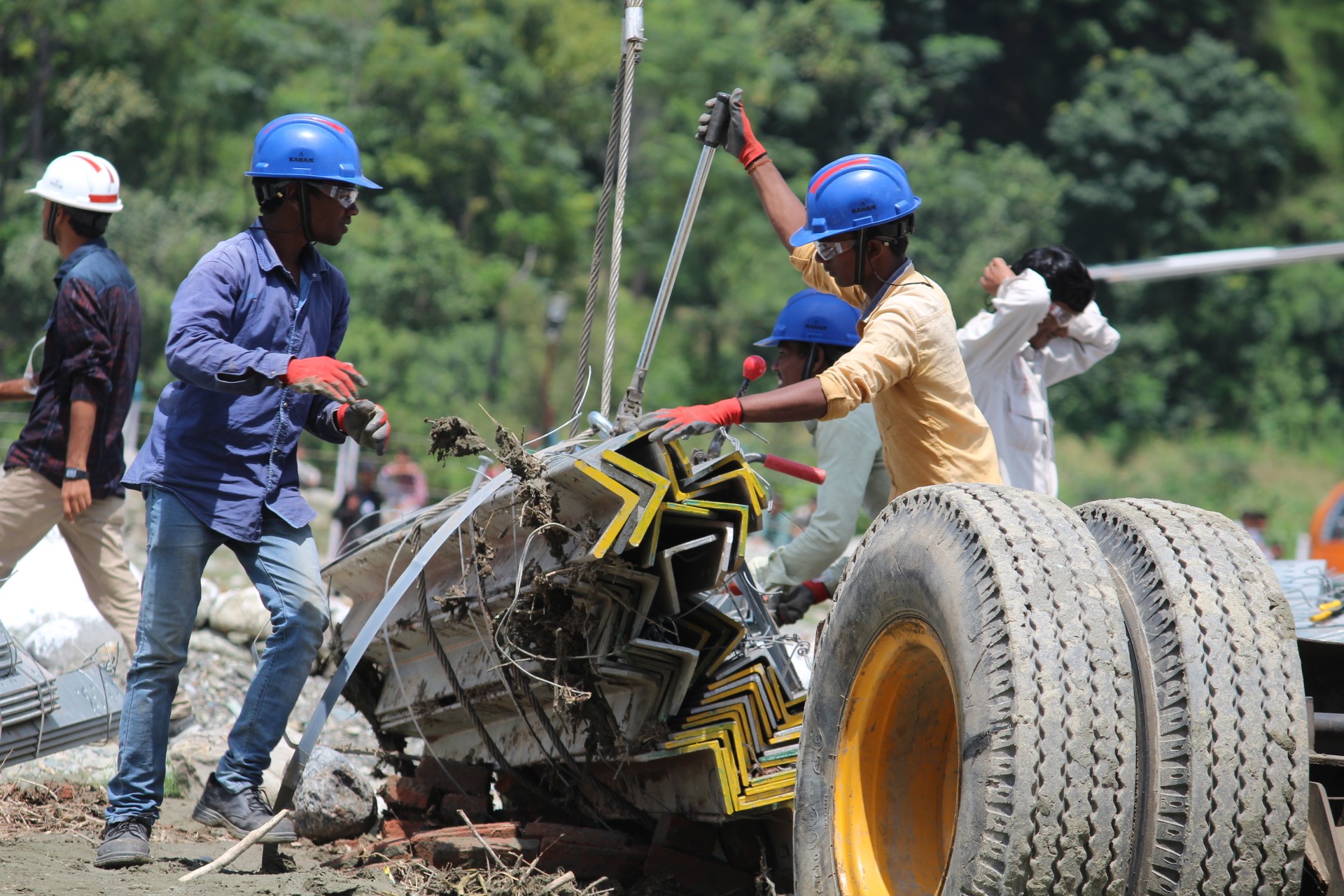
Three weeks before Olga was due to arrive, the river next to the staging yard flooded. The base camp went under. The team rebuilt it.
Three weeks before Olga was due to arrive, the river next to the staging yard flooded. The base camp went under. The team rebuilt it.
Over the project's working seasons, the S-64 airdropped more than 3,500 tonnes of material across the Pir Panjal range. Cement, gravel, sand, steel, water.


3500 tonnes
3500 tonnes
3500 tonnes
cement
cement
cement
gravel
gravel
gravel
sand
sand
sand
steel
steel
steel
water
water
water
A single sortie did what a week of mule trains could not. No one had used a heavy-lift helicopter for transmission construction in Asia before.
A single sortie did what a week of mule trains could not. No one had used a heavy-lift helicopter for transmission construction in Asia before.
A single sortie did what a week of mule trains could not. No one had used a heavy-lift helicopter for transmission construction in Asia before.
work under curfew
work under curfew
work under curfew
On 8 July 2016, the Indian armed forces successfully neutralized a dreaded terrorist in Kashmir — a 22-year-old militant commander — in an encounter in Kokernag, in south Kashmir. By the following morning, the Valley had shut down.
What followed was the longest period of unrest Kashmir had seen in decades.
The project did not move in those six months.
On 8 July 2016, the Indian armed forces successfully neutralized a dreaded terrorist in Kashmir — a 22-year-old militant commander — in an encounter in Kokernag, in south Kashmir. By the following morning, the Valley had shut down.
What followed was the longest period of unrest Kashmir had seen in decades.
The project did not move in those six months.

The sections of NRSS-29 running through Shopian and Pulwama — two districts at the centre of the unrest — were among the worst affected. Vehicles carrying project materials were damaged. Drivers were assaulted.
The sections of NRSS-29 running through Shopian and Pulwama — two districts at the centre of the unrest — were among the worst affected. Vehicles carrying project materials were damaged. Drivers were assaulted.
Our Project Head was detained for several hours by a crowd while attempting to restart work during a bandh, and was released only after negotiation. None of this was made public at the time.
Our Project Head was detained for several hours by a crowd while attempting to restart work during a bandh, and was released only after negotiation. None of this was made public at the time.
Our Project Head was detained for several hours by a crowd while attempting to restart work during a bandh, and was released only after negotiation. None of this was made public at the time.
When work resumed — slowly, in late 2016 — it ran on a different clock.
By the time the unrest fully subsided, 73 percent of foundations in Package 4 had been completed — most of it executed inside windows of three to four working hours a day.
When work resumed — slowly, in late 2016 — it ran on a different clock.
By the time the unrest fully subsided, 73 percent of foundations in Package 4 had been completed — most of it executed inside windows of three to four working hours a day.

Crews started at first light and left before midday, ahead of the hours when crowds gathered.

Sites in the most volatile sections were prioritised: lock in foundations now, return for stringing when conditions allowed.
The other axis of difficulty was the border itself.
Seventy kilometres of the line ran within 500 metres of the Line of Control. In Akhnoor, the alignment came within 1.6 kilometres of the Pakistani border. In R.S. Pura — Jammu's basmati belt — it ran 5.2 kilometres from the fence. Cross-border shelling halted work multiple times across 2016 and 2017. Workers spent hours in trenches and culverts during exchanges.
The other axis of difficulty was the border itself.
Seventy kilometres of the line ran within 500 metres of the Line of Control. In Akhnoor, the alignment came within 1.6 kilometres of the Pakistani border. In R.S. Pura — Jammu’s basmati belt — it ran 5.2 kilometres from the fence. Cross-border shelling halted work multiple times across 2016 and 2017. Workers spent hours in trenches and culverts during exchanges.
Excavation, on more than one occasion, turned up live grenades and unexploded ordnance. Army EOD teams were called. Work stopped, sometimes for a day, sometimes longer, until the site was cleared.
Excavation, on more than one occasion, turned up live grenades and unexploded ordnance. Army EOD teams were called. Work stopped, sometimes for a day, sometimes longer, until the site was cleared.
Excavation, on more than one occasion, turned up live grenades and unexploded ordnance. Army EOD teams were called. Work stopped, sometimes for a day, sometimes longer, until the site was cleared.


Live grenades and unexploded ordnance found at tower excavation sites.
365 DAYS
365 DAYS
365 DAYS
A full year, in calendar terms, lost to events. Floods, landslides, ceasefire violations, curfews and bandhs.
A full year, in calendar terms, lost to events. Floods, landslides, ceasefire violations, curfews and bandhs.
A full year, in calendar terms, lost to events. Floods, landslides, ceasefire violations, curfews and bandhs.
The schedule still held.
The schedule still held.
The schedule still held.

zero fatalities building the line
zero fatalities building the line
zero fatalities building the line
Across four years of construction — through shelling, snow, twelve-thousand-foot altitudes, stone-pelting protests and grenades pulled from foundation pits — NRSS-29 recorded zero fatalities.
Across four years of construction — through shelling, snow, twelve-thousand-foot altitudes, stone-pelting protests and grenades pulled from foundation pits — NRSS-29 recorded zero fatalities.
Over one million safe man-hours logged across the line. Zero lost-time injuries in Package 4 — the militancy-affected section. Around 1,500 worker inductions completed before deployment. Roughly 800 medical check-ups for height workers. Acrophobia tests before any worker was cleared to climb a tower at altitude. Safety nets strung beneath stringing operations — a practice unusual enough in Indian transmission at the time to count as an industry first.
Over one million safe man-hours logged across the line. Zero lost-time injuries in Package 4 — the militancy-affected section. Around 1,500 worker inductions completed before deployment. Roughly 800 medical check-ups for height workers. Acrophobia tests before any worker was cleared to climb a tower at altitude. Safety nets strung beneath stringing operations — a practice unusual enough in Indian transmission at the time to count as an industry first.

The technical measures were not exotic. Horizontal lifelines anchored along tower legs.

Warm jackets and inner layers distributed before each winter cycle.

First-aid training rotated through every gang on every package. Daily toolbox talks at the start of every shift.
What was less standard was the operational discipline. Night working at Amargarh, in winter, under floodlights, to recover months lost to unrest. Worker evaluations and refresher trainings repeated through the construction window. Monthly safety awards. Safety stickers on every helmet and every tower leg, so that the standard was legible on the equipment, not just on a noticeboard.
What was less standard was the operational discipline. Night working at Amargarh, in winter, under floodlights, to recover months lost to unrest. Worker evaluations and refresher trainings repeated through the construction window. Monthly safety awards. Safety stickers on every helmet and every tower leg, so that the standard was legible on the equipment, not just on a noticeboard.
What 1,000 MW
Looks Like
What 1,000 MW
Looks Like
What 1,000 MW
Looks Like
The Jalandhar–Samba line was mechanically complete in March 2016 — fourteen months ahead of the contracted schedule.
The substations at either end of it, owned by the central transmission utility, were not yet ready to receive it. So the team designed a contingency: charge the line through an existing parallel corridor, using a 72-hour shutdown window negotiated with the Central Electricity Authority and the National Load Despatch Centre. The charging itself took 36 hours.
The Jalandhar–Samba line was mechanically complete in March 2016 — fourteen months ahead of the contracted schedule.
The substations at either end of it, owned by the central transmission utility, were not yet ready to receive it. So the team designed a contingency: charge the line through an existing parallel corridor, using a 72-hour shutdown window negotiated with the Central Electricity Authority and the National Load Despatch Centre. The charging itself took 36 hours.
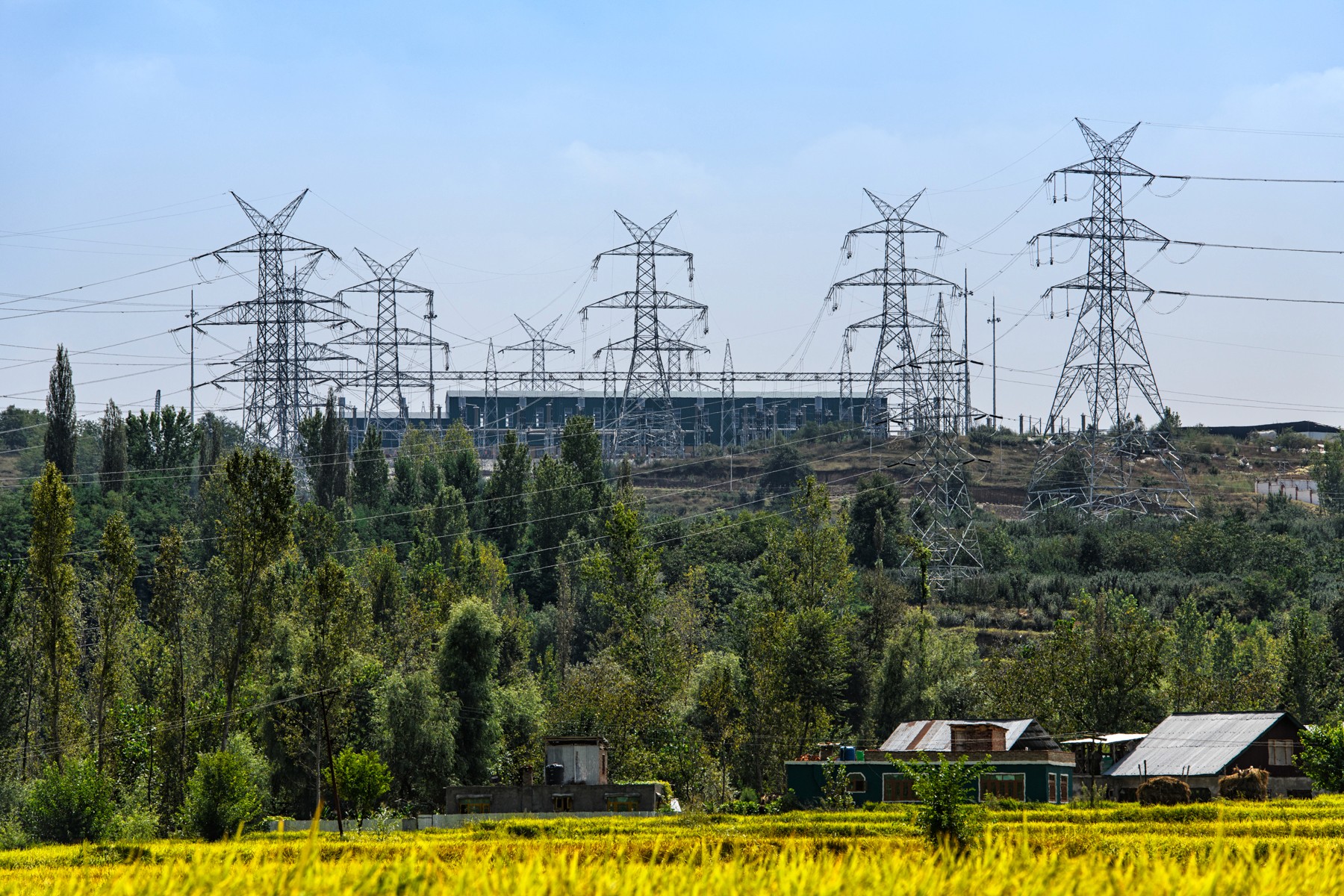
That early commissioning ferried roughly 700 megawatts into the Valley through the 2016–17 winter. On 23 December 2016, when a disturbance rippled across the Northern Grid and J&K's existing corridor came under stress, the new line held the system stable.
The Samba–Amargarh sections, and the GIS substation at Amargarh, were charged on 1 September 2018. Prime Minister Narendra Modi dedicated the project to the nation in February 2019.
That early commissioning ferried roughly 700 megawatts into the Valley through the 2016–17 winter. On 23 December 2016, when a disturbance rippled across the Northern Grid and J&K’s existing corridor came under stress, the new line held the system stable.
The Samba–Amargarh sections, and the GIS substation at Amargarh, were charged on 1 September 2018. Prime Minister Narendra Modi dedicated the project to the nation in February 2019.
The numbers, in the end, are these.
Transmission capacity into J&K increased by more than 70 percent. Over 1,000 megawatts of additional power became transferable to the Valley. Eleven districts now sit on a grid with redundancy that did not exist before. Roughly 500 local workers were employed during construction. The state, for the first time in its history, has a resilient alternate route to the Northern Grid.
The numbers, in the end, are these.
Transmission capacity into J&K increased by more than 70 percent. Over 1,000 megawatts of additional power became transferable to the Valley. Eleven districts now sit on a grid with redundancy that did not exist before. Roughly 500 local workers were employed during construction. The state, for the first time in its history, has a resilient alternate route to the Northern Grid.

The project went on to win the IPMA Global Project Excellence Award in the mega projects category in 2019, and the S&P Global Platts Construction Project of the Year that December. Those awards are noted here because they exist, not because they matter.
The project went on to win the IPMA Global Project Excellence Award in the mega projects category in 2019, and the S&P Global Platts Construction Project of the Year that December. Those awards are noted here because they exist, not because they matter.
What matters is harder to put a figure on.
What matters is harder to put a figure on.

A hospital in Anantnag that no longer switches to diesel at sunset.

A school in Baramulla where afternoon classes don't end when the line trips.

A medical shop that doesnt allow medicines from expiring.

A refrigerator shop owner who can sell more units.

An apple orchard farmer who doesn't have to rely on generators

The child studying by lantern, you will not meet that child.
There is no way to count one electrified evening against another. But somewhere in the eleven districts the line now serves, the lantern got put away.
Transmission lines are the part of the power system nobody notices when they work. NRSS-29 spent four years convincing terrain, conflict, and an untested regulatory environment that it would work. The towers stand on ridges most people will never see. The power that runs through them will be felt by people who will never know the name of the project.
That is, in the end, how we deliver Power to the People.
There is no way to count one electrified evening against another. But somewhere in the eleven districts the line now serves, the lantern got put away.
Transmission lines are the part of the power system nobody notices when they work. NRSS-29 spent four years convincing terrain, conflict, and an untested regulatory environment that it would work. The towers stand on ridges most people will never see. The power that runs through them will be felt by people who will never know the name of the project.
That is, in the end, how we deliver Power to the People.

We are Resonia
Shaping the future of power transmission





We are Resonia
Shaping the future of power transmission
We are Resonia
Shaping the future of power transmission