The Valley That Sat on a Live Wire
Kishtwar is not easy to reach. The road in follows the Chenab river through gorges that drop hundreds of metres below. In winter, snow closes sections of the route for weeks. In summer, landslides do the same. The town sits inside one of the most hydropower-rich valleys in the Himalayas — and for most of its recent history, that fact meant almost nothing to the people who lived there.
The Chenab Valley holds the potential for more than 16,000 MW of hydroelectric generation. Three major projects — Pakaldul (1,000 MW), Kiru (624 MW), and Kwar (540 MW) — were planned or under construction within a few kilometres of the town. Kishtwar should, by any measure, have had reliable power. Instead, local demand of around 140–145 MW was being met by a single ageing 132 kV line that could carry barely 100 MW. The system ran hot. Load shedding was routine. When the line faulted, Kishtwar, Doda, and Padder went dark together.
There was no redundancy. One line, one corridor, no backup. The situation was structurally fragile, and everyone in the power planning system knew it. What took longer to resolve was the path out of it.
Why the Grid Needed a Different Node
The problem wasn’t generation. The problem was that generation and consumption had no reliable path between them.
India’s transmission planners had identified this gap by 2020. The Ministry of Power’s gazette notification in September that year approved the establishment of a new switching station at Kishtwar — a 400/132 kV GIS substation that would serve as a pooling point for the Chenab Valley’s hydro projects and provide a second source of supply to the districts below. PFC Consulting incorporated the project SPV in April 2021. The contract was awarded through a tariff-based competitive bidding process in March 2022, and Resonia acquired the SPV in December of that year.
The mandate was technically compact but operationally significant: build a Gas Insulated Substation at altitude, LILO one circuit of the existing Kishenpur–Dulhasti 400 kV line, and commission within three years — in a valley accessible by a single mountain road.
The Road Was the Problem
Infrastructure projects in India face many constraints. In Kishtwar, the binding one was physical: how do you move a 400 kV GIS substation up a mountain?
The main access road into the site includes a 6-kilometre stretch of single-lane mountain highway with tight hairpin bends. Transformers and reactors — the heaviest components of any high-voltage substation — cannot be broken down into smaller pieces and reassembled on site. They must arrive whole. That meant road widening. The team coordinated with PWD and PMGSY to widen and stabilise the critical stretch, a process that required its own approvals and its own schedule.

At the same time, the site itself presented geotechnical uncertainty. The Himalayas are seismically active. The Chenab Valley floor is loose alluvium in places and fractured rock in others. Standard foundation designs — deep isolated footings — would have required aggressive excavation on an already unstable slope, increasing both risk and environmental impact. Plate load tests were carried out first. The results pointed to a different approach: common raft foundations, which spread the load, reduced the depth of dig, and cut overall excavation significantly. The change in method was evidence-led, not cost-driven.
The substation itself was built across eight terraced levels carved into the mountainside. The design reduced earthwork by roughly 70 percent compared to a conventional flat-platform approach. Each terrace was stabilised using a combination of SDA anchors, soil nailing, pressure grouting, geo-sheets, coir mats, and drainage systems — a hybrid slope stabilisation method suited to the mixed geology. PEB structures were designed with differential foundation depths where the natural ground varied. GIS bus duct foundations were integrated with retaining walls using shear keys.
None of this is standard vocabulary on a transmission project. It reflects how much the site refused to behave like a normal site.
Working to the Valley’s Schedule


Kishtwar winters arrive early and leave late. The working window — the months when construction is actually feasible at elevation — is narrow. The team planned around it deliberately: micro-schedules aligned to seasonal windows, daily monitoring of weather and access conditions, night shifts during the longer summer days to compress timelines.
Progress was tracked digitally through the project lifecycle. Governance reviews were structured to catch slippage early. When road access issues or approvals threatened to create delays, escalations went through the PM Pragati Portal, the Cabinet Secretary, CEA, and the J&K administration. The system was used — not as a formality, but as a real coordination mechanism.

The project was commissioned on 15 December 2025. Thirty-six months from acquisition. Within a budget of ₹4.07 billion. The charging was first-time right — no rework, no repeat shutdowns. Network availability since commissioning has remained above 99.90 percent.
The charging was first-time right. The line has stayed above 99.90% availability since.
The People in the Valley
Land acquisition is a critical dependency for transmission projects. In the Kishtwar district, navigating the statutory acquisition process required careful adherence to strict regulatory timelines and a highly sensitive approach to local dynamics.

The local workforce was prioritised. Over 50,000 man-days of employment were generated during construction, the majority drawn from Kishtwar and surrounding areas. Workers were trained in GIS substation operations — not just in how to build the facility, but how to run it. The project partnered with ITIs for upskilling. For many workers, it was their first exposure to Gas Insulated Switchgear, a technology found in fewer than a handful of locations in J&K. That exposure has lasting value.
Zero lost-time incidents were recorded across the project lifecycle. In a high-altitude mountain construction environment — with cranes, heavy civil works, steep access routes, and a compressed schedule — that record is not accidental. Winter working protocols, mechanised operations to reduce manual exposure in the most hazardous zones, and ISO 45001-aligned safety systems were in place from the start.
What the Valley Has Now
Kishtwar Transmission Line is not a large project by circuit kilometre. At 2.8 cKM, it barely registers on a transmission map. What it represents is a different kind of scale.
The substation at Kishtwar can now evacuate up to 2,164 MW from the Chenab Valley — Pakaldul, Kiru, and Kwar together — once those generation projects reach full capacity. The single 132 kV dependency is gone. Kishtwar and Doda now have a redundant source of supply. Load shedding in the districts has reduced materially. The hydropower sitting in the hills above the valley finally has a corridor out.
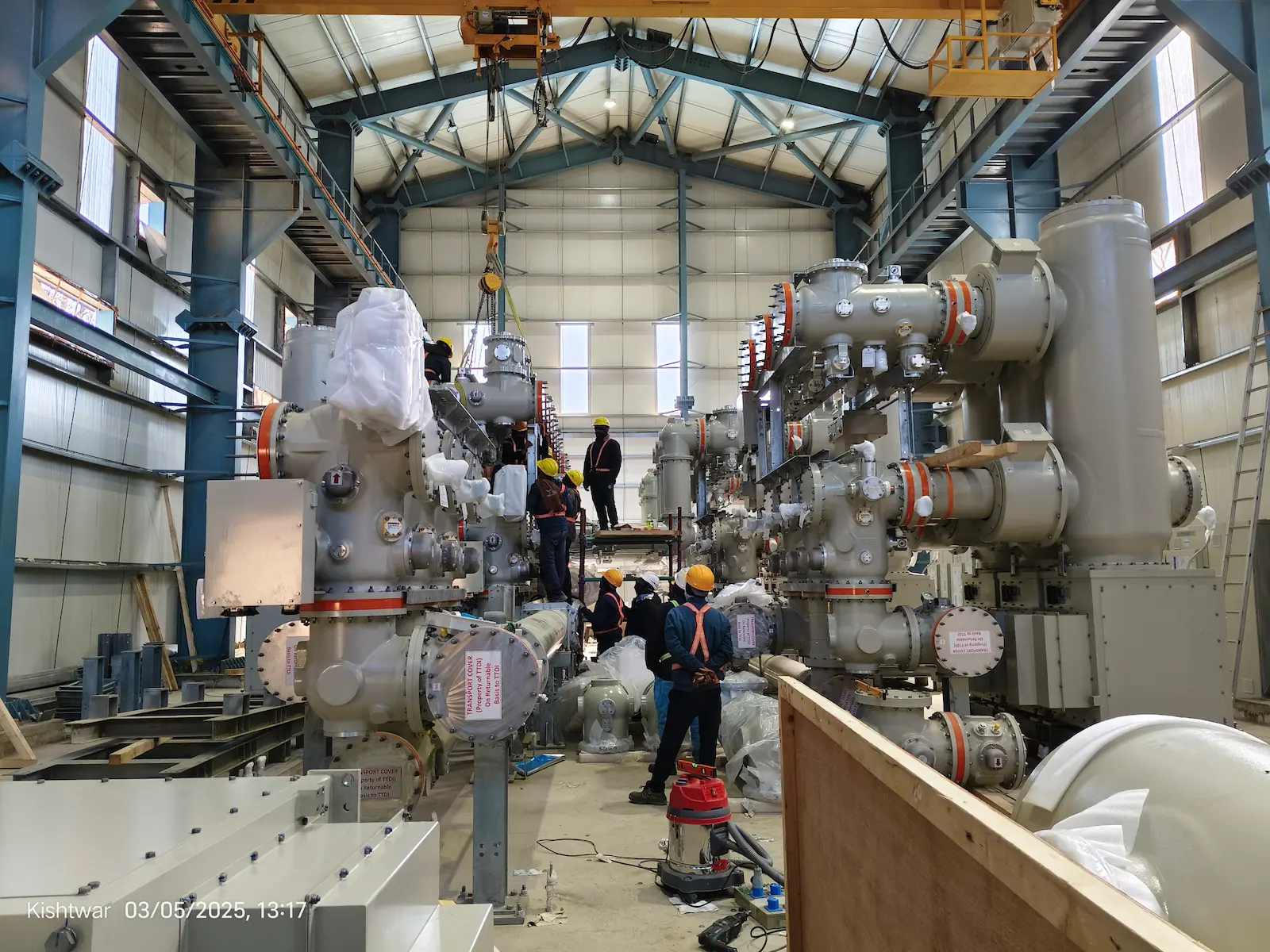
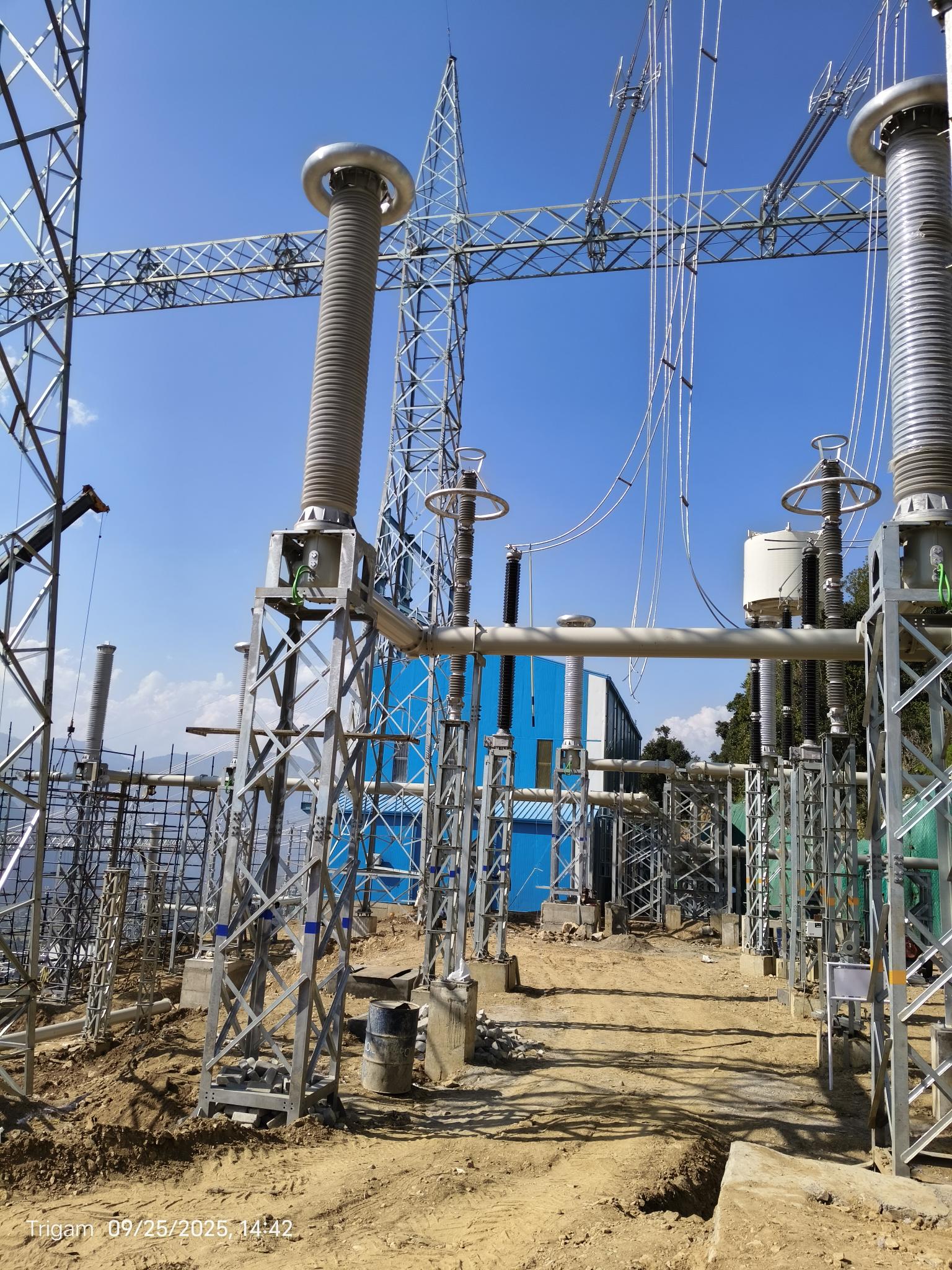

The infrastructure is also built to grow. Provision for future 765 kV and 220 kV expansion has been retained. As generation capacity in the Chenab Valley increases over the coming decade, KwTL will not become a bottleneck — it was designed not to.
Resonia will operate and maintain the asset for 35 years. The substation at Prigam village will sit in the mountainside for longer than that. A project like this is not a transaction. It is the permanent rerouting of how electricity moves through a valley — and by extension, how that valley functions.

a national award

KwTL won National Project Excellence Award at IPMA Global Project Professional Forum 2026 for excellence in project management, innovation, and stakeholder management.
Resonia Ltd. has been recognised with the National Project Excellence Award at the IPMA Global Project Profession Forum 2026 for its flagship project, Kishtwar Transmission Limited (KwTL). The IPMA Global Project Profession Forum is a premier global platform that celebrates excellence in project management and honours impactful infrastructure achievements across industries.
Rewarded for its groundbreaking innovation and exemplary stakeholder collaboration, the Kishtwar project is far more than a transmission line.
Strategically carved out of the rugged, hydro-rich terrains of Jammu and Kashmir’s Chenab Valley, KwTL acts as the ultimate catalyst for Valley’s energy revolution. By seamlessly channelling 2164 MW of hydropower into the National Grid, this project eliminates long-standing transmission bottlenecks, guarantees rock-solid grid stability, and lights up millions of lives.