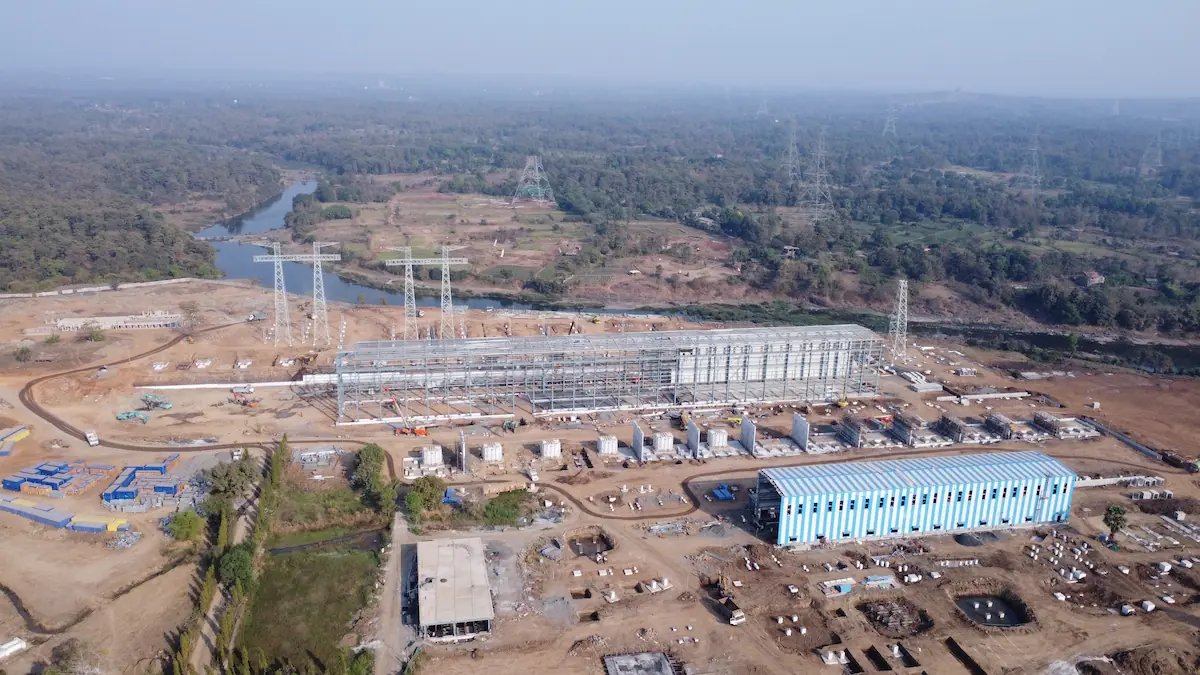
Khavda, Kutch. A village that sits at the edge of India — remote, wind-battered, at the margins of the map. Until recently, it barely registered outside Gujarat. Today, it is the most consequential energy address in Asia.
The 30 GW Khavda Renewable Energy Park — the world's largest — is under development here. Solar and wind, side by side, across a landscape that stretches to every horizon. The ambition is staggering. The engineering challenge is greater. And at its centre is a question that every gigawatt of clean energy must answer: how do you move this power to the people who need it?
Why Maharashtra needs this corridor?
Maharashtra is India's most industrialised state and one of its largest power consumers. The Mumbai Metropolitan Region alone peaks above 4,500 MW. Across the state, thermal power — coal-fired, carbon-intensive, increasingly expensive — accounts for 61% of contracted capacity. In Mumbai, that figure reaches 70%.
MSEDCL has committed to sourcing 5,000 MW of renewable power from Khavda for 25 years under long-term PPAs. The CO2 displacement from this single commitment is substantial. But the commitment only holds if the transmission infrastructure exists to honour it. K4CPTL is that infrastructure.

What's being built
K4CPTL — Gujarat: The Inter-State Spine
The Gujarat component establishes the inter-state transmission corridor that carries Khavda's power from Gujarat into Maharashtra. Spanning 188 cKM across 106 villages and 13 talukas in Gujarat and Dadra & Nagar Haveli, it comprises:
– 765 kV South Olpad – Boisar Transmission Line spanning Gujarat, Maharashtra and DNH
– ±300 MVAR STATCOM in Gujarat for dynamic reactive power support
– Two numbers of 765 kV line bays at South Olpad
The Gujarat component does not include new substations — it is a precisely engineered transmission spine designed for one purpose: reliable, high-capacity inter-state power flow. Expected commissioning: October 2026.
K4CPTL — Maharashtra: The Distribution Network
The Maharashtra component receives Khavda's power and integrates it into the state grid with intelligence and redundancy. Its 306 cKM traverse 150 villages across 5 talukas, with four transmission lines and sophisticated substation infrastructure:
– South Olpad (GIS) – Boisar-II (GIS) 765 kV D/C Transmission Line — the primary high-voltage corridor
– LILO of Navsari (New) – Padghe (PG) 765 kV D/C Line at Boisar-II — grid integration
– Boisar-II (Sec-II) – Velgaon (MH) 400 kV D/C Transmission Line — downstream distribution
– LILO of Bhabaleshwar – Padghe (M) 400 kV D/C Line at Boisar-II (Sec-II)
The Maharashtra substation infrastructure is formidable: 4×1500 MVA, 765/400 kV GIS substations and 2×500 MVA, 400/220 kV GIS substations at Boisar-II, supported by 80 MVAR switchable line reactors and a ±200 MVAR STATCOM. Expected commissioning: November 2026.
105 villages, 106 Talukas, One Corridor
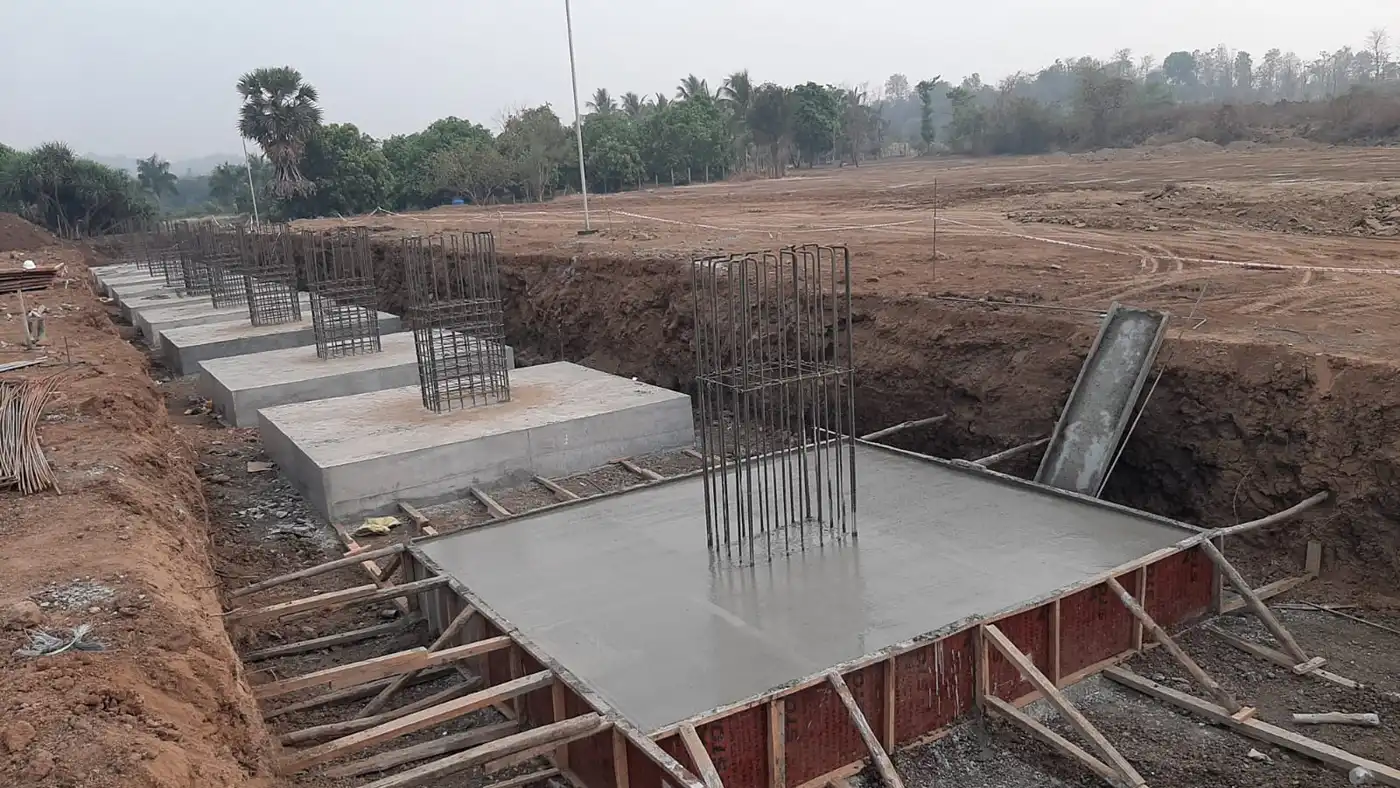
The communities through which K4CPTL passes — 150 villages in Maharashtra, 106 talukas across Gujarat — are partners in this project, not just landowners on its path. The right-of-way process in both states involves direct engagement with village communities, transparent compensation processes, and employment opportunities during construction.
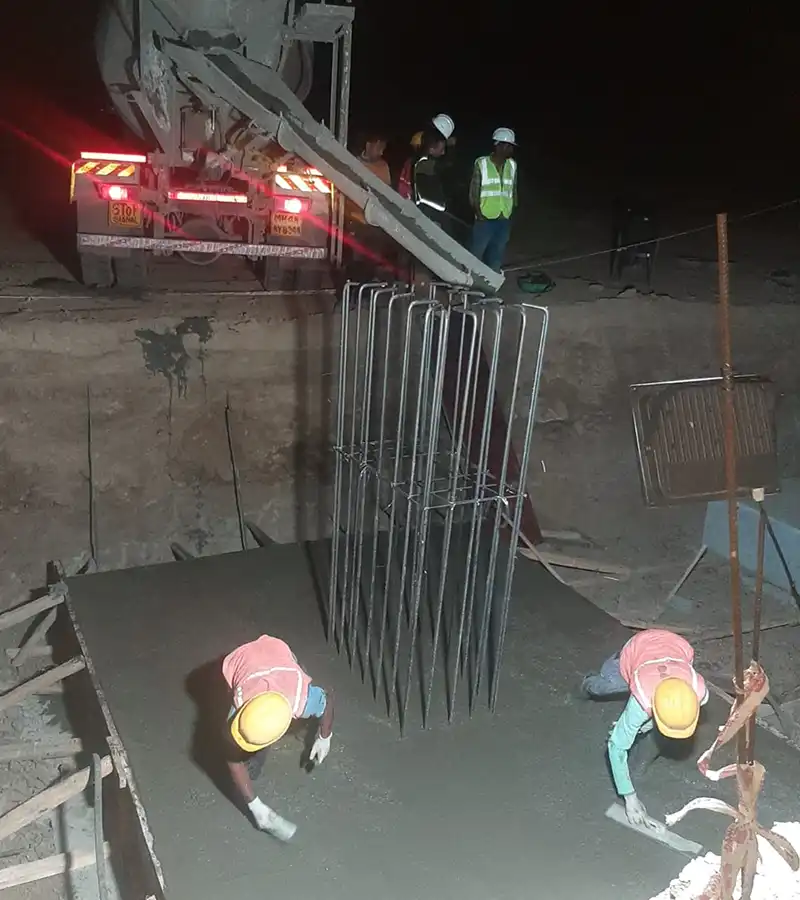
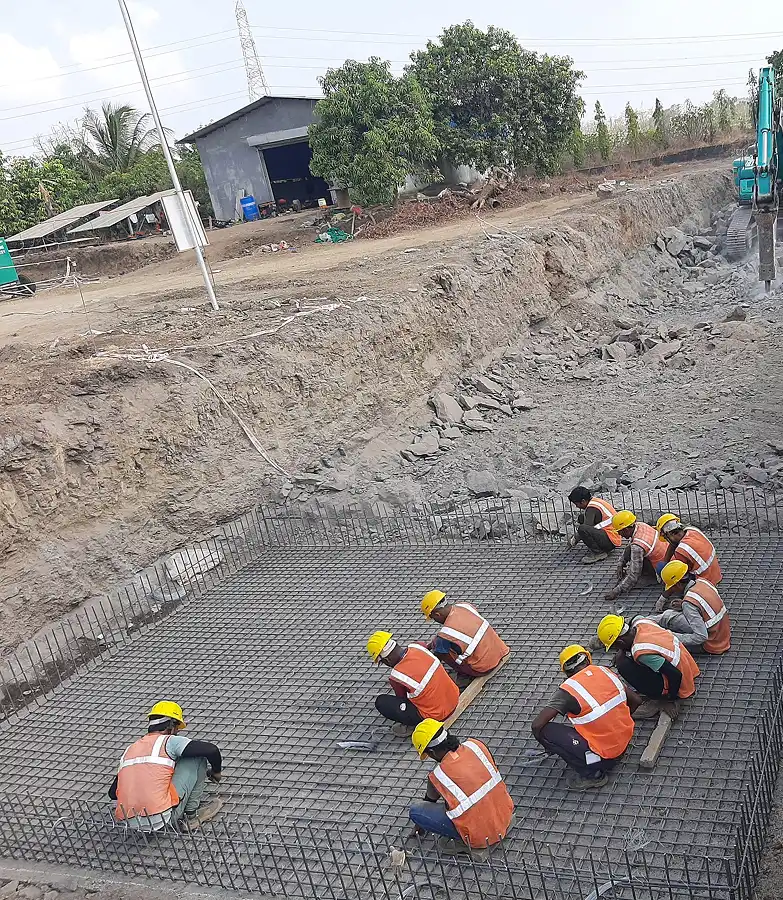
Advanced mechanisation — DAGP-based tower erection, assembly line construction, drone and heli operations, Infravision stringing — is deployed not just for efficiency but for minimising disturbance to communities and farmland. Every mechanised technique is a choice to do less harm to the landscape through which this corridor moves.
What changes when this is commissioned
Maharashtra's thermal dependence begins to break. The CO2 displacement from 5,000 MW of renewable power — coal plants typically emit 1.1 kg of CO2 per MWh — compounds over 25 years into numbers that matter for both climate and cost. Power procurement costs for MSEDCL fall. The state moves toward its net-zero commitments with infrastructure that will outlast every political cycle.
And Khavda — that remote, wind-battered village at India's edge — becomes the source of something that hundreds of millions of people in Maharashtra will use every day, without ever knowing its name.