India's eastern states — Chhattisgarh, Odisha, Jharkhand, West Bengal — sit atop some of the country's richest energy endowments. Coal. Hydro. Thermal generation capacity that has been built, expanded, and contracted for decades. Independent power producers in the east had signed long-term generation agreements and were producing power that the national grid needed.
The problem was not generation. It was access.
The western and northern regions — Maharashtra, Madhya Pradesh, Rajasthan, Delhi, and the industrial corridors between them — were demand centres with growing appetites and constrained supply. Power that could theoretically flow from east to west was bottlenecked by transmission infrastructure that had not kept pace with the generation capacity being built upstream of it.
JTCL was conceived to break that bottleneck. A 994 circuit kilometre corridor running from Dharamjaygarh in Chhattisgarh to Jabalpur in Madhya Pradesh, and onward from Jabalpur to Bina — a line that would create the open-access pathway the Central Transmission Utility needed to honour the long-term agreements it had entered into with eastern generation companies.
Without this corridor, power purchase agreements between eastern generators and western consumers were promises the grid could not keep. JTCL made them keepable.
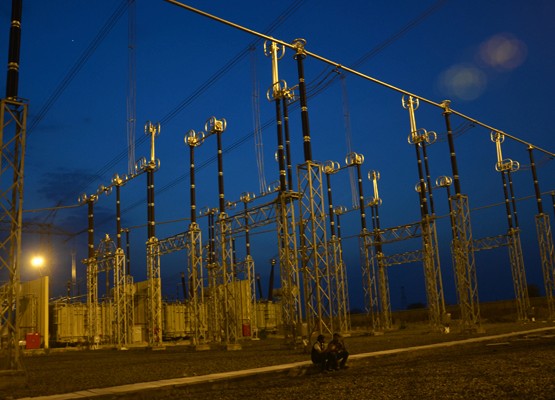
What Open Access Actually Means
Open access in transmission is one of those concepts that matters enormously in practice and gets little attention in the public conversation about energy. It is the right of a generator to transmit power through the national grid to a buyer in another state — not on an ad hoc basis, but under long-term agreements that create investment certainty for both sides.
For independent power producers in eastern India, open access through a strong, reliable transmission corridor means their generation capacity has a guaranteed path to market. They can enter into power purchase agreements with confidence that the physics of the grid will honour what the contract requires. Without that certainty, investment in eastern generation is speculative. With it, it becomes bankable.
The Central Transmission Utility had already entered into long-term open-access agreements with several generation companies in the eastern region — agreements premised on the existence of transmission infrastructure that, when JTCL was awarded in 2011, had not yet been built. JTCL was not an optional strengthening measure. It was the physical prerequisite for agreements that had already been signed.
A Landmark Hidden in Plain Sight
The Jabalpur–Dharamjaygarh line did something that had not been done before in Indian transmission history: it became India's first 765 kV double-circuit line owned by a private company.
765 kV is the highest voltage level in India's alternating current transmission network. Lines at this voltage level carry the largest volumes of power over the longest distances with the lowest proportional losses — they are the highways of the national grid, the infrastructure that makes large-scale inter-regional power transfer possible. Every 765 kV line built by the private sector since JTCL has followed a precedent that this project set.
That milestone did not arrive easily. It arrived through a planning phase that tested every dimension of the project's institutional and operational resilience.

The Clearance Problem: Three Fronts Simultaneously
The route from Dharamjaygarh to Jabalpur runs through some of central India's most forested and ecologically sensitive terrain. Chhattisgarh and Madhya Pradesh together contain some of the country's most significant forest cover — the Satpura ranges, the Maikal hills, the river valleys of the Narmada basin. A transmission line of this scale, at this voltage level, inevitably crosses forest land. And crossing forest land means engaging with a clearance process that is thorough, multi-tiered, and not designed for speed.
JTCL's planning phase encountered obstacles across three simultaneous fronts, each requiring different teams, different counterparts, and different timelines:
Right of way: Securing RoW across the 994 circuit kilometre corridor required engagement with thousands of individual landowners, multiple district administrations, and state revenue departments in two states. RoW is rarely a single negotiation — it is hundreds of them, each with its own history, its own sensitivities, and its own pace.
Forest clearances: The forest stretches of the route required formal clearance under the Forest Conservation Act — a process that involves the state forest departments, the Ministry of Environment, Forest and Climate Change, and, in sensitive cases, the National Board for Wildlife. Delays in this process are not exceptions. They are the baseline expectation for any large linear infrastructure project in forested terrain.
Section 164 authorisation: The Electricity Act's Section 164 authorisation — granting the right to survey, fell trees, and carry out construction work — was delayed. Without it, execution in the most sensitive stretches of the route could not legally begin.
The response was not sequential. Rather than resolving one front and then moving to the next — an approach that would have compounded the delays already accumulating — teams worked simultaneously with every relevant entity. District administrations, forest departments, revenue officials, and state-level clearance bodies were engaged in parallel, with coordinated tracking of progress across all fronts.
It was slower than anyone wanted. It was faster than it would have been any other way.
Heli-Stringing: Recovering Time in the Forest
Once execution began, the delays that the planning phase had accumulated needed to be recovered. The terrain through which JTCL passes — dense forest, hilly stretches, river crossings — presented the same constraint that central Indian transmission projects consistently encounter: ground access for conventional stringing equipment is limited, slow, and disruptive in ways that forest clearance conditions do not permit.
Heli-stringing was deployed to resolve the constraint. Helicopters carried conductors between tower locations across stretches where conventional ground equipment could not reach without causing the forest disturbance that the project's clearance conditions were specifically designed to prevent. The aerial approach honoured both the operational requirement — conductors strung accurately, at pace, to specification — and the environmental commitment that forest clearances had been granted on the basis of.
Heli-stringing was not a workaround. It was the method that made forest-sensitive execution possible without compromising the clearances that had taken months to obtain.
It also recovered time. The delays accumulated during the planning phase were real, and the commissioning deadline was fixed. Heli-stringing in the forest stretches accelerated the stringing programme enough to close the gap between where the project was and where it needed to be. JTCL was fully commissioned in September 2015.

What JTCL carries
Since commissioning, JTCL has operated as one of the primary open-access corridors linking eastern India's generation capacity to western and northern demand centres. The long-term agreements that the Central Transmission Utility had entered into with eastern generation companies — agreements that JTCL was the physical prerequisite for — are now being honoured, every day, through 994 circuit kilometres of 765 kV infrastructure.
For independent power producers in Chhattisgarh and the eastern region, JTCL represents investment certainty: the assurance that power generated under long-term contracts has a reliable path to the buyers who contracted for it. For the western and northern grid, it represents supply diversity — access to eastern generation capacity that reduces dependence on any single corridor or fuel type.
For Madhya Pradesh's industrial and urban centres along the Jabalpur–Bina stretch, the single-circuit 765 kV line provides the high-capacity supply that a state whose economy straddles agriculture, manufacturing, and growing urban demand requires. Jabalpur — a city of over a million people, a major railway junction, a centre for defence manufacturing and education — draws on transmission infrastructure that was not available before JTCL.
The Significance of Being First
India's transition to a nationally integrated power market — where generation in one state can reliably serve demand in another, where open access is a functioning reality rather than a regulatory aspiration — depends on private sector participation in transmission infrastructure at the highest voltage levels.
JTCL's status as India's first privately-owned 765 kV double-circuit line is not a historical footnote. It is a proof point that the private sector could deliver infrastructure of this technical complexity, in this terrain, within a regulatory framework that required simultaneous engagement across forest, land, and statutory clearance processes.
Every private-sector 765 kV transmission project that has followed — and there have been many — operates within a framework that JTCL helped establish. The technical precedents, the regulatory relationships, the construction methods in forested terrain, the heli-stringing capability in central India's dense landscapes — all of it was proven here first.
Being first means carrying the uncertainty that later projects don't. There was no template for a private company delivering a 765 kV double-circuit line through forested central India. JTCL became the template.
The project is now a decade into its 35-year operational tenure, maintained under Resonia's BOOM commitment. The corridor that took years of clearances, simultaneous multi-agency engagement, and aerial stringing to build is now part of the grid's permanent architecture — quietly carrying eastern India's power west, every hour of every day.