Gurugram does not sleep. Its data centres run through the night, its factories hold shifts around the clock, its residential towers demand power every hour of every day. Yet for years, beneath the glass facades and highway flyovers, the city's electricity supply rested on a foundation of diesel — thousands of generators humming in basements and car parks, filling the air with noise, fumes, and the quiet acknowledgement that the grid had not kept pace with the city above it.
GPTL was built to change that. Not incrementally. Definitively.
The Stakes
Haryana's power demand was on a steep climb — from around 9,000 MW in 2014-15, heading toward 12,000 MW and beyond. Agriculture, industry, commerce, and a rapidly urbanising population were all pulling in the same direction. The grid, however, was not designed for what Gurugram and Palwal had become: dense, energy-intensive, economically critical geographies where a power cut is not an inconvenience but a direct cost to businesses competing in national and global markets.
The interim solution — over 10,000 diesel generator sets running across Gurugram alone — was neither sustainable nor acceptable. DG sets are expensive to run, damaging to air quality, and a poor substitute for a transmission system built to handle the load. Every hour of diesel generation was a bill being paid by businesses, residents, and the environment alike. The NCR's already strained air quality absorbed the exhaust of a power gap that should have been solved at the grid level.
GPTL was envisaged precisely to retire that arrangement.
What's Being Built
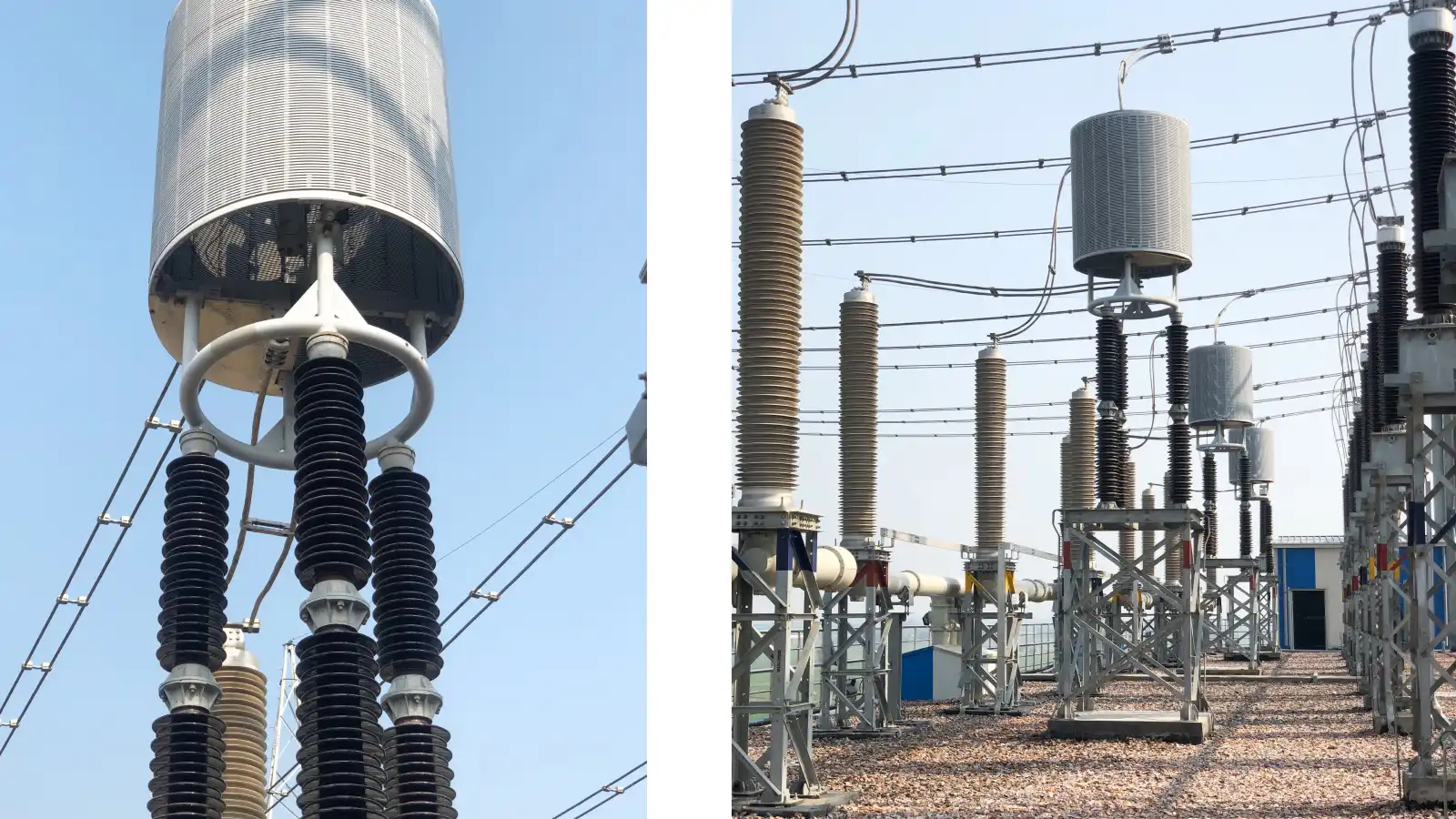
The project delivers approximately 2,000 MW of reliable inter-state transmission capacity to Haryana, through three GIS substations and associated transmission infrastructure spanning 136 km across Gurugram and Palwal. The key transmission elements include the 400 kV Aligarh–Prithala line, the Kadarpur–Sohna Road line, the LILO of the Gurgaon Manesar line at Sohna Road, and the Neemrana–Dhanonda line — together forming a robust corridor that feeds into substations at Palwal, Rangla, Rajpur, Meerpur, and Kurah, connecting them firmly to the Inter-State Transmission System.
The project delivers over 3,000 MVA of transmission capacity, directly benefiting approximately three million households and the dense concentration of manufacturing, services, and digital infrastructure that defines the economic character of the region.
The Human Thread
GPTL was the first project of its kind executed entirely within an urban environment. Every one of its eleven elements passed through densely populated stretches of Gurugram and Palwal — areas where land is scarce, contested, and expensive, and where the tolerance for construction disruption is low.
Securing right-of-way in this environment demanded something different from the rural or semi-rural playbook. There were no fields to negotiate around, no straightforward land acquisition processes, and no room to simply route a line away from inhabited areas. The teams worked simultaneously across multiple government departments and distribution utilities, keeping approval processes moving in parallel rather than in sequence. In an environment where a single stalled clearance can freeze an entire project front, parallel execution of regulatory engagement was not an efficiency — it was a necessity.
Forested land within the urban corridor added another layer, requiring dedicated forest clearance teams working independently alongside the construction and ROW functions. Every acre preserved was a decision made upstream, in planning, not recovered after the fact.
Mechanisation
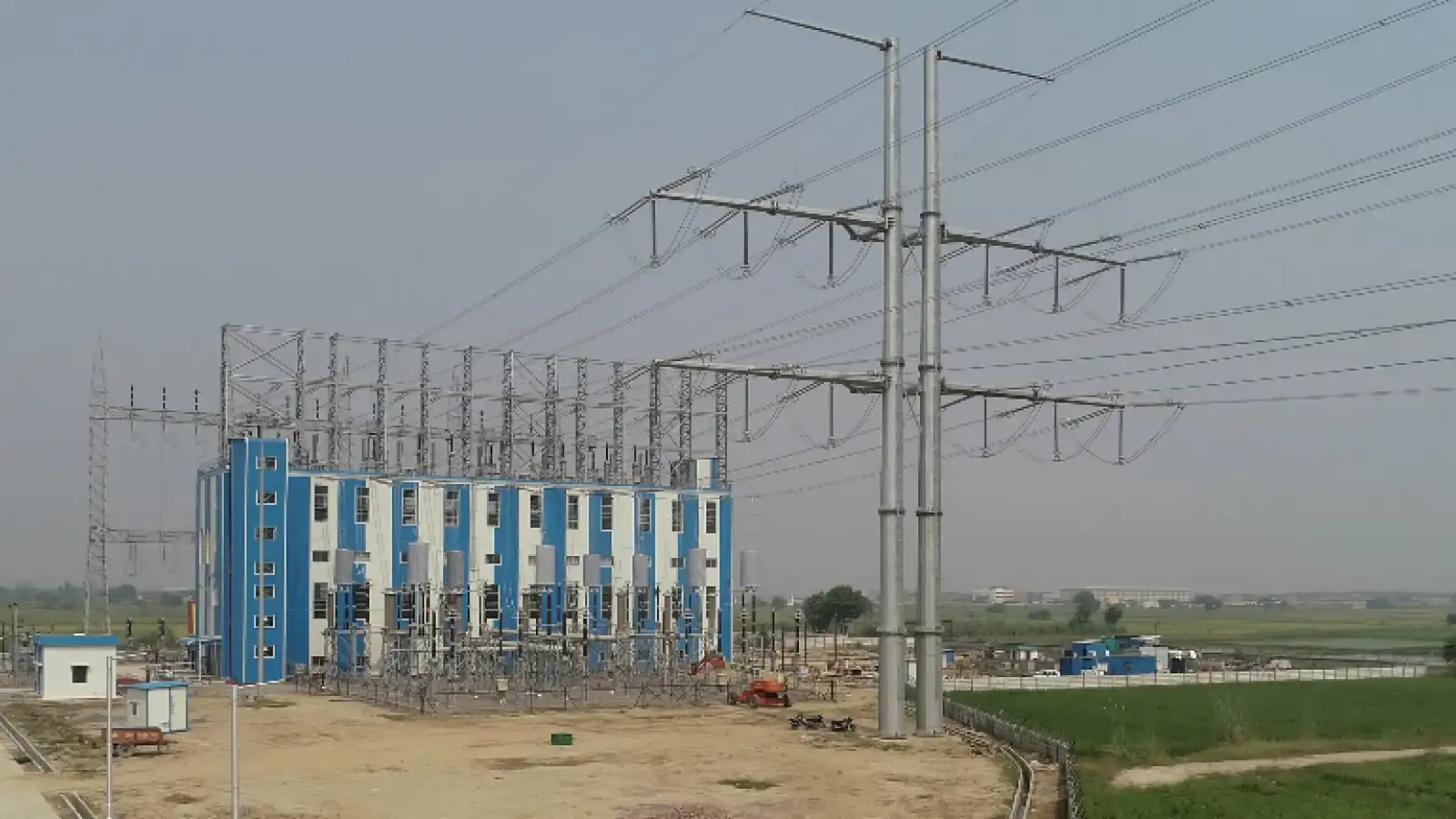
The engineering response to urban constraint at GPTL was genuinely inventive. Where a conventional transmission tower would demand land that simply did not exist, multi-circuit monopole towers were deployed — single-pole structures carrying multiple circuits simultaneously, reducing land requirements by 80% compared to standard lattice tower configurations. Micro-piling created the foundations for these monopoles with minimal surface disturbance — critical in areas where ground disruption has immediate consequences for roads, utilities, and residents.
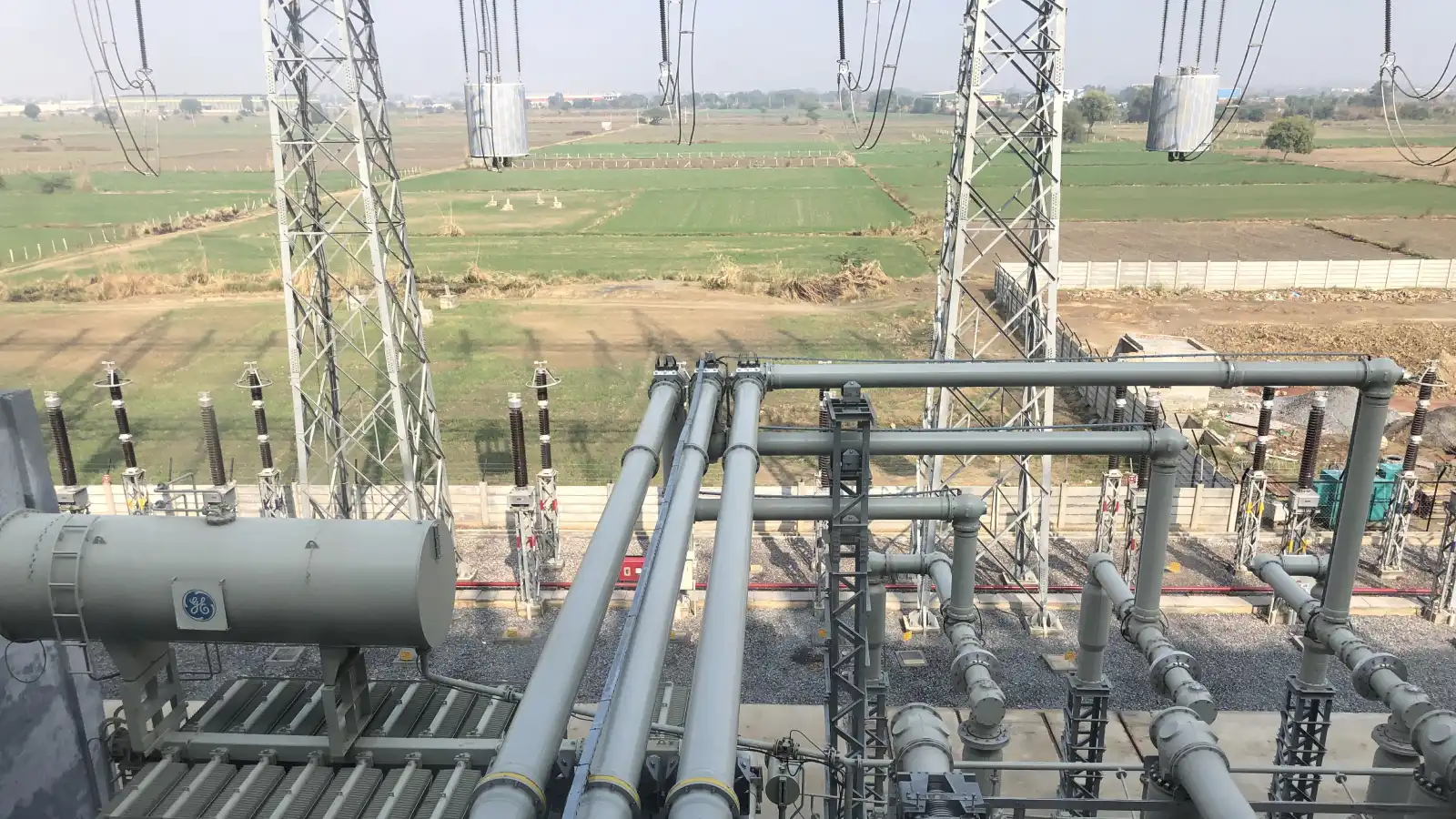
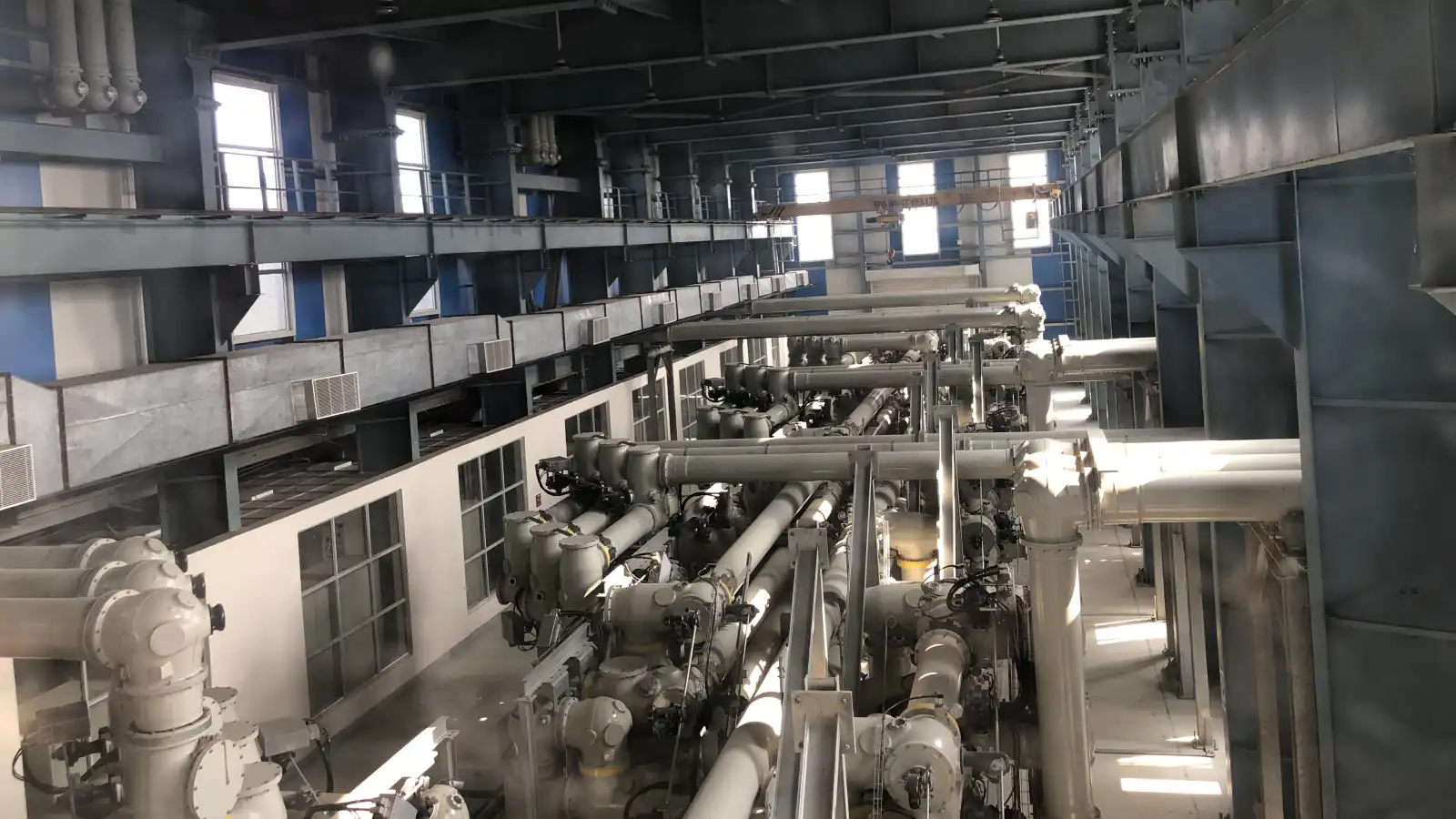
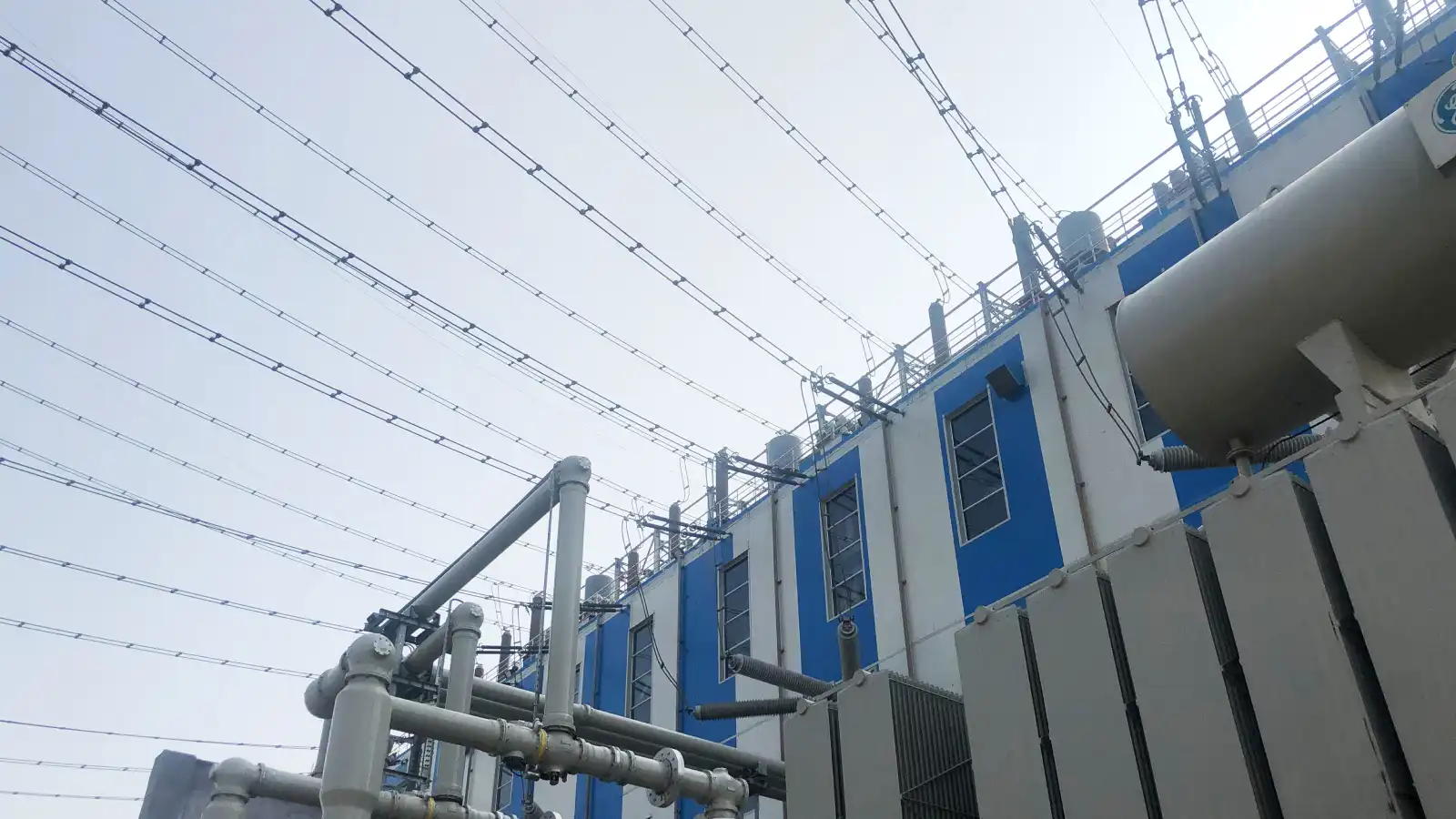
The substation design, however, was the project's most significant departure from convention. Rather than acquiring the 12 acres a conventional GIS substation of equivalent capacity would require, the team built vertically. India's first vertical GIS substations rose at Prithla, Kadarpur, and Sohna — multi-storied structures with 220 kV open switchyards on the rooftop, each occupying just 3.8 acres. A 75% reduction in land footprint, achieved not by compromising capacity, but by rethinking how a substation occupies space. The underground construction of fully automated GIS infrastructure, designed to operate without routine human intervention, added a further layer of engineering complexity — and long-term operational efficiency.
The combined impact of these design choices offset more than 18,000 tonnes of CO2 emissions annually compared to a conventional layout.
What It Unlocks
GPTL does not just add megawatts. It replaces a system of stopgaps with something permanent. Over 10,000 diesel generator sets in Gurugram become redundant. Three million households gain access to reliable, grid-supplied power. The NCR's air gains a small but meaningful reprieve. And the industrial and services economy of Haryana — one of India's most productive — gains the transmission backbone it needs to keep growing without the cost and uncertainty of diesel dependence.
The grid caught up. Finally.